A few weeks ago, I received an internal message from engineering leadership that stopped me mid-scroll:
"You have been nominated in recognition of your exceptional work. Your dedication and contributions that go above and beyond have been noticed, and we truly appreciate all that you do."
I had been selected to attend the LA-08 launch as an official guest of the program: an exclusive facility tour around the launch pad, a catered reception at ULA's Atlas Spacecraft Operations Center (ASOC), and direct rooftop observation of liftoff itself.
LA-08 represents the final Atlas V departure under our first orbital deployment contract. I was present on mission loops for our very first Atlas flight when our software first entered staging. Being invited to observe this concluding chapter from four miles away felt like a milestone that comes once in a career.
I work as a founding engineer on the Launch Operations Software team at Amazon Leo. Since joining, I authored core diagnostic services that monitor satellite avionics from the moment hardware arrives at the payload processing facility up through terminal countdown sequences. The automated health check suite I designed feeds critical diagnostic evaluations directly into flight director go/no-go polling before every single mission, including LA-08. During this specific window, I also served as primary on-call engineering support, ready to investigate hardware telemetry if an automated pre-flight threshold failed.
The nomination recognized continuous reliability across multiple deployment cycles rather than a single isolated software release. Working on mission-critical aerospace infrastructure, where your code determines whether an orbital payload clears launch locks or triggers a terminal hold, has remained the most fulfilling technical responsibility of my career. Receiving personal recognition for those silent pre-flight verification loops via a physical seat at liftoff meant a great deal to me.
The Pad Tour
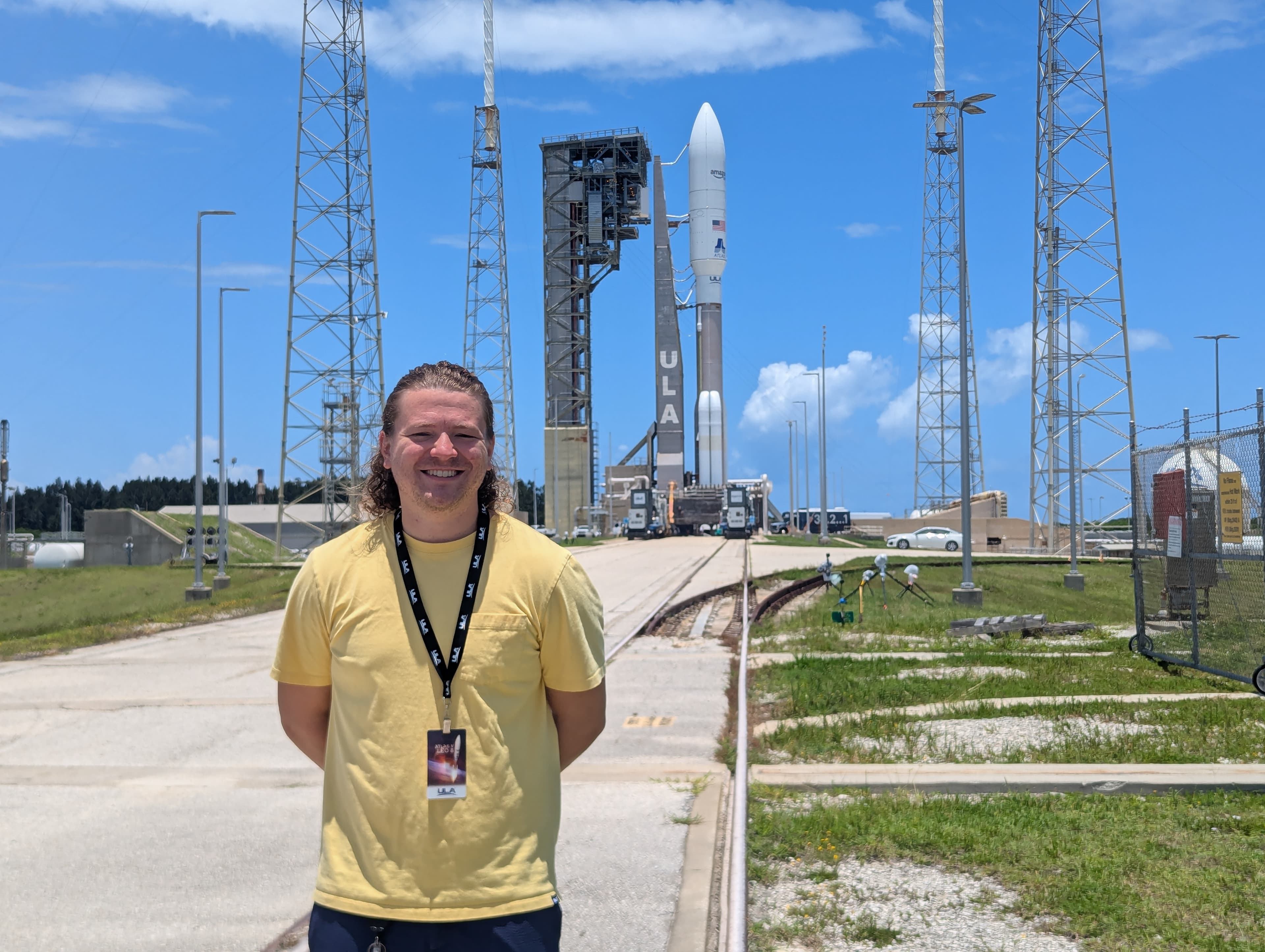
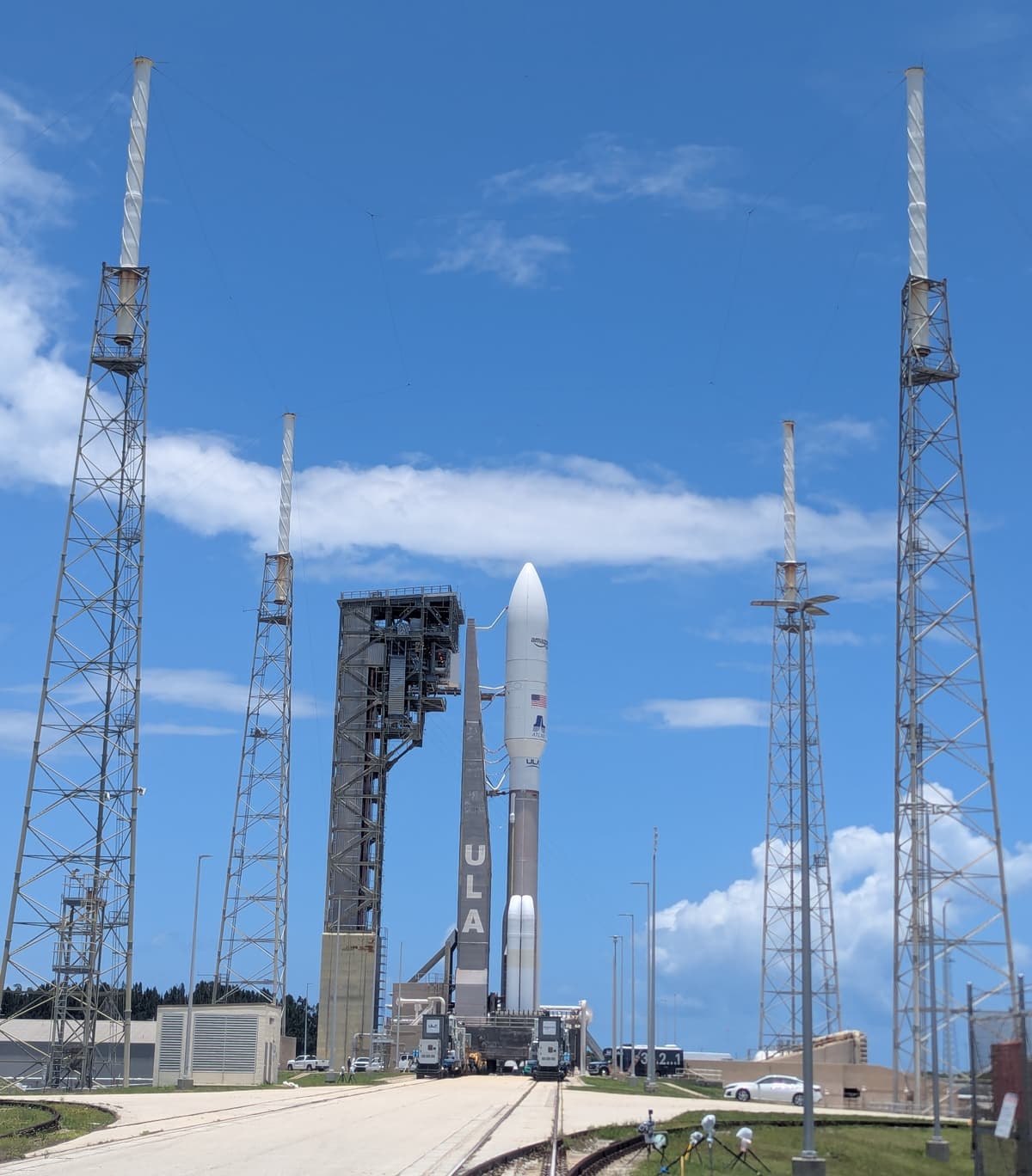
The afternoon prior to launch window opening, our group boarded transport vehicles outside the ULA Guest Center for an extensive perimeter briefing. We drove along Cape Canaveral barrier trails and active historical launch complexes before staging our bus outside the safety fencing at Launch Complex 41. Stately above the structure stood Atlas V, fully stacked with our payload encapsulated under the composite fairing.
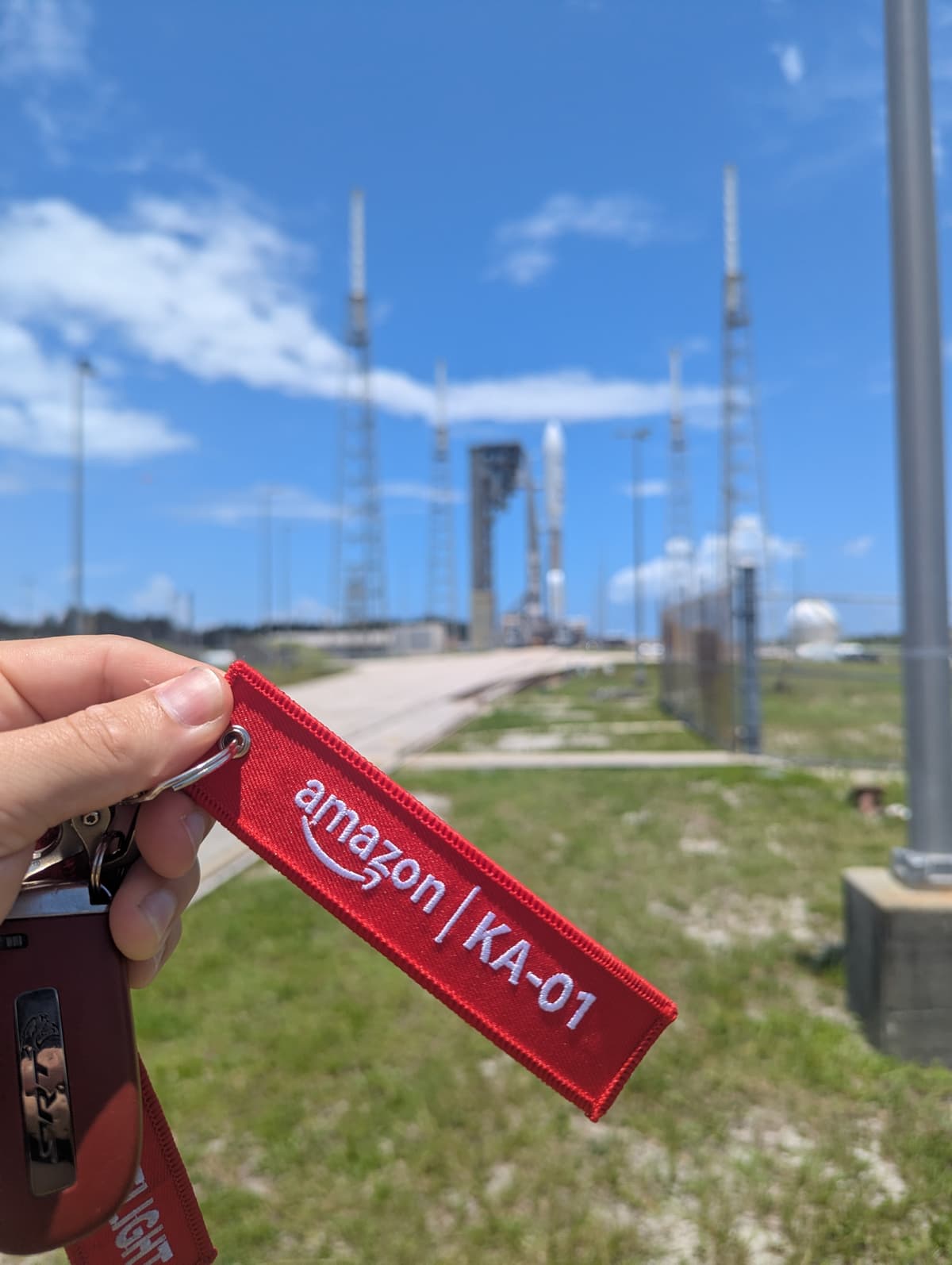
I brought my original KA-01 Remove Before Flight fabric streamer in my jacket pocket as a physical reminder of the very first Amazon satellite flight I supported during active go/no-go polling operations. Displaying that flight tag directly in front of the final contracted Atlas mission felt like the most fitting way to bookmark our engineering journey.
Launch Night
Our night reception commenced inside ULA's Atlas Spacecraft Operations Center. Out on the open facility rooftop, we experienced an unobscured 360-degree panorama: the illuminated launch pad standing four miles north and tranquil coastal salt water stretching out eastward under a bright reflection from a near-full moon. The gathering united Amazon software personnel, ULA facility operations crews, and primary structural contractor teams who spent years fabricating rocket assemblies.
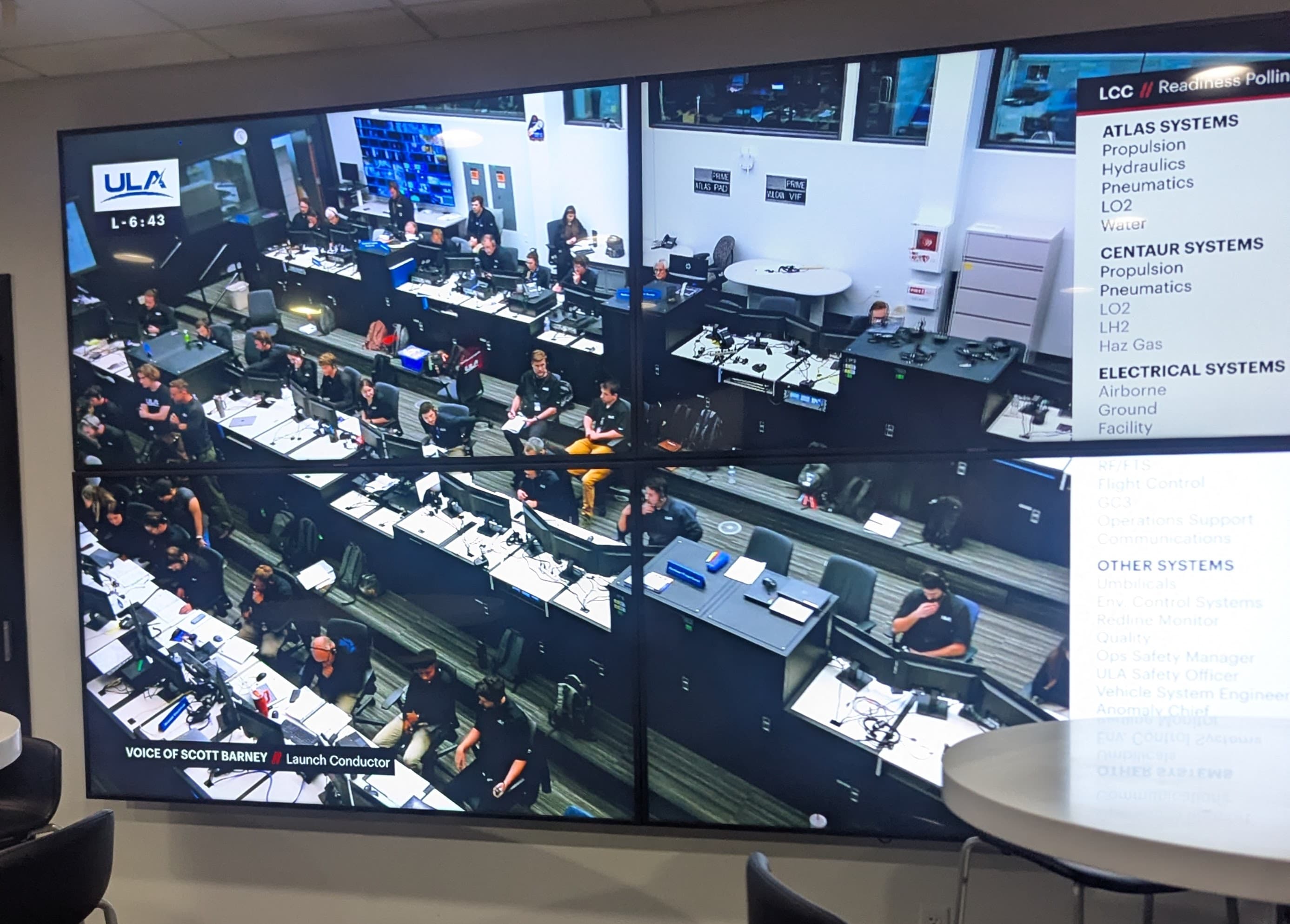
A synchronized video stream from active launch control played across viewing displays, keeping conversations glued to terminal countdown sequences as staging milestones elapsed. When the automated sequencer entered its terminal minute, every conversation quieted and eyes locked onto the northern horizon.
Main stage engines ignited, turning the dark Florida shoreline into daylight in less than two seconds. Atlas V accelerated rapidly off the launch pad before the delayed acoustic rumble and chest-pounding shockwaves struck our viewing rooftop several seconds later. It stands among the most visually magnificent launches I have witnessed along the Space Coast, rivaling the sheer scale of the Artemis night departure earlier in the year.
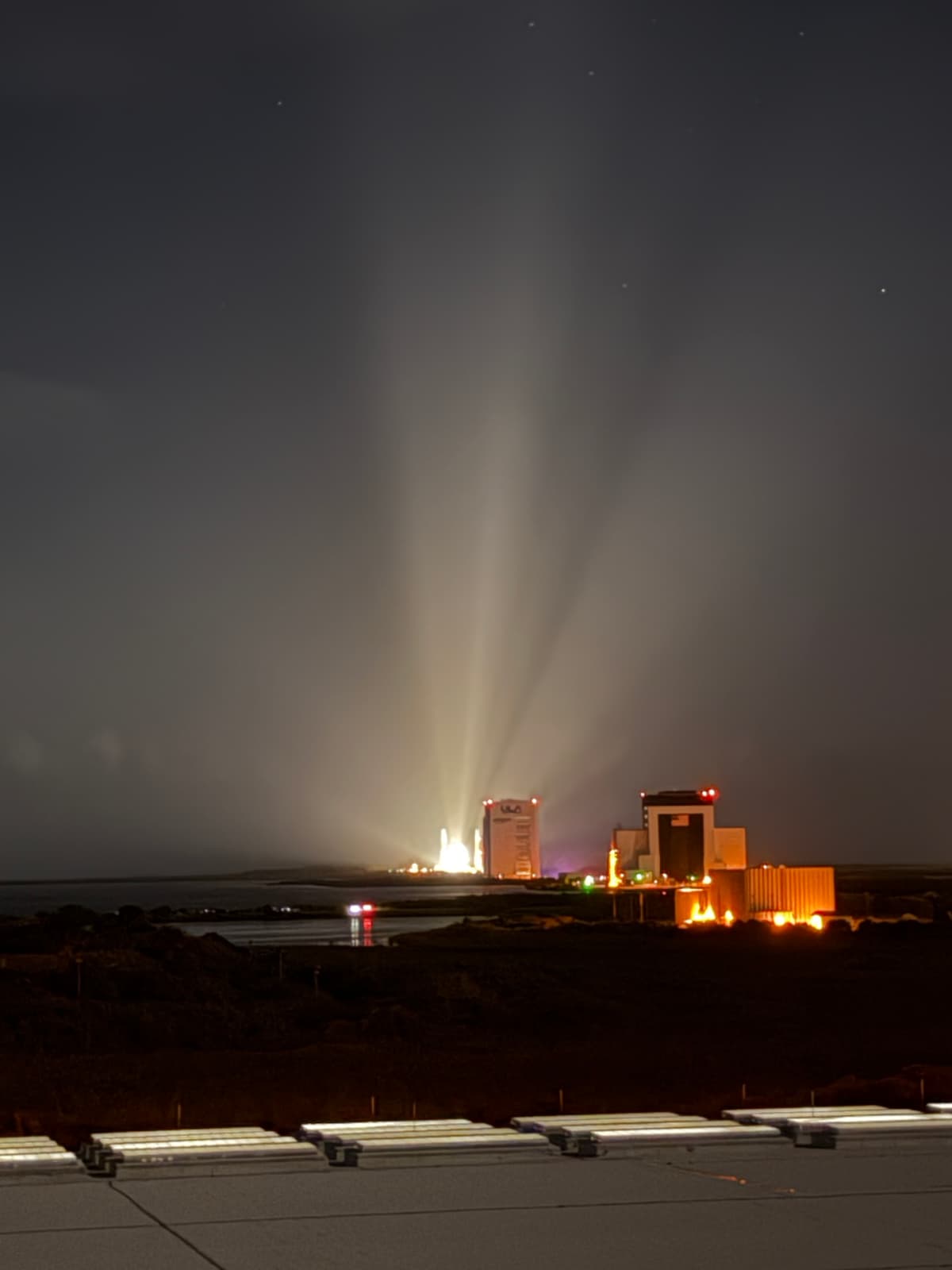
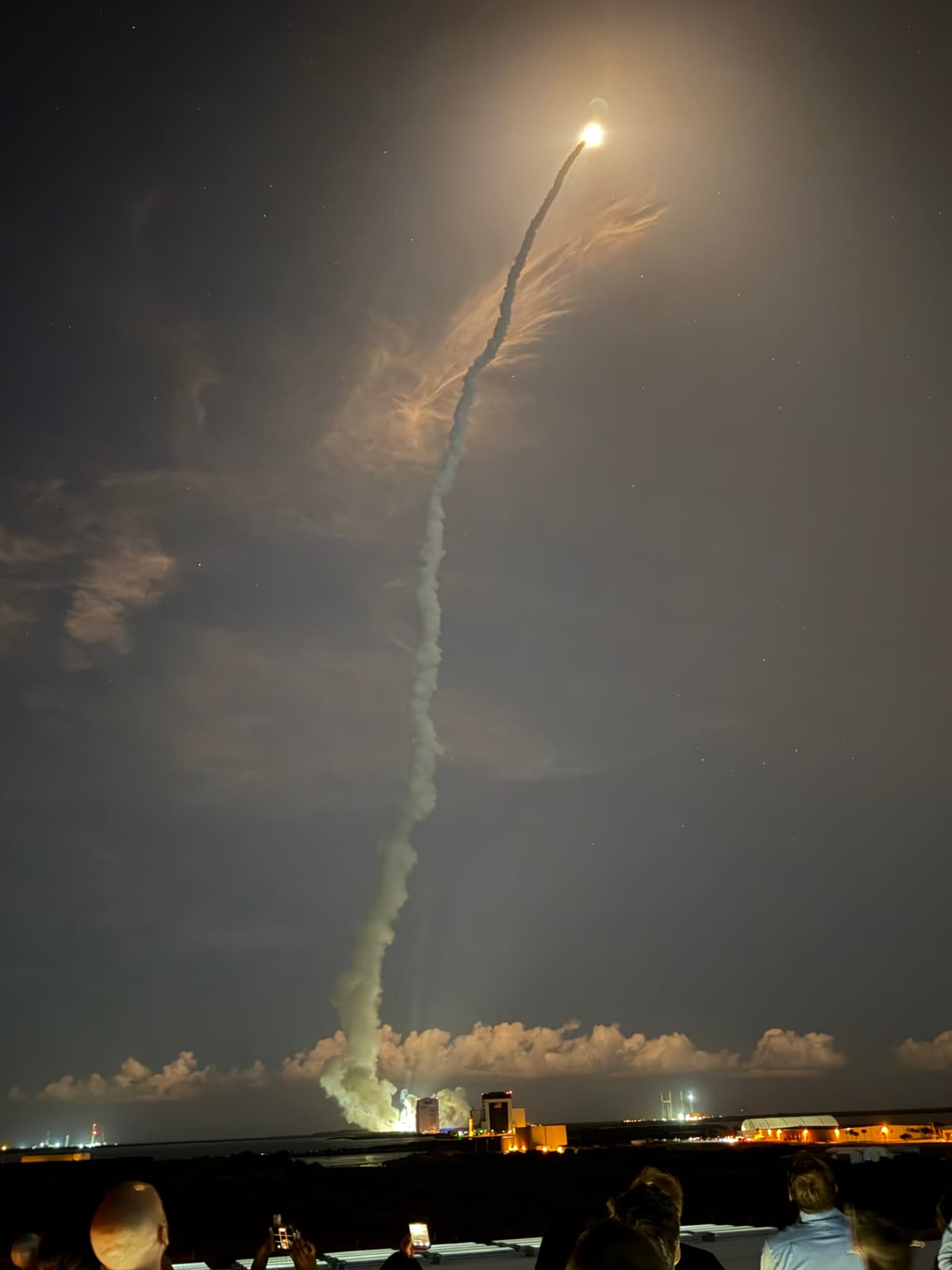
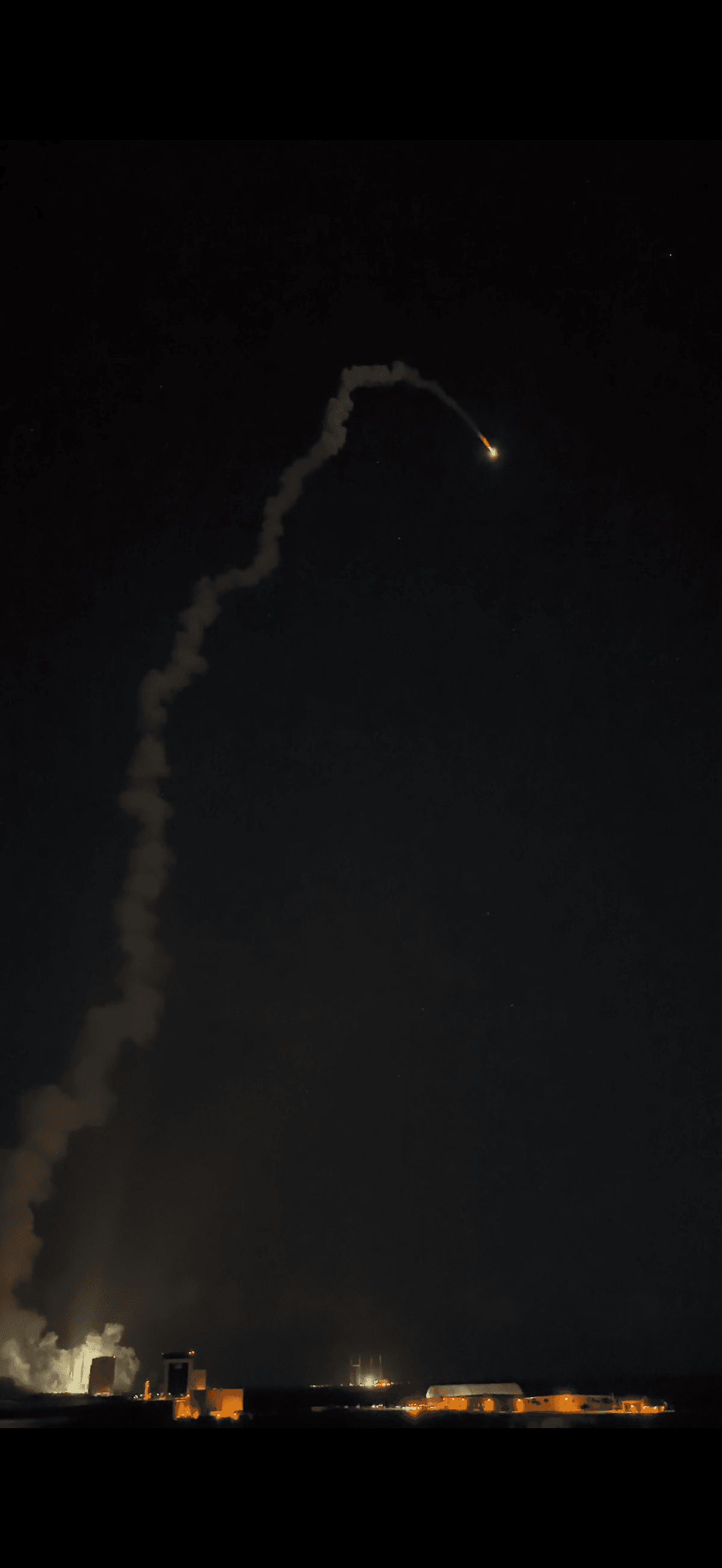
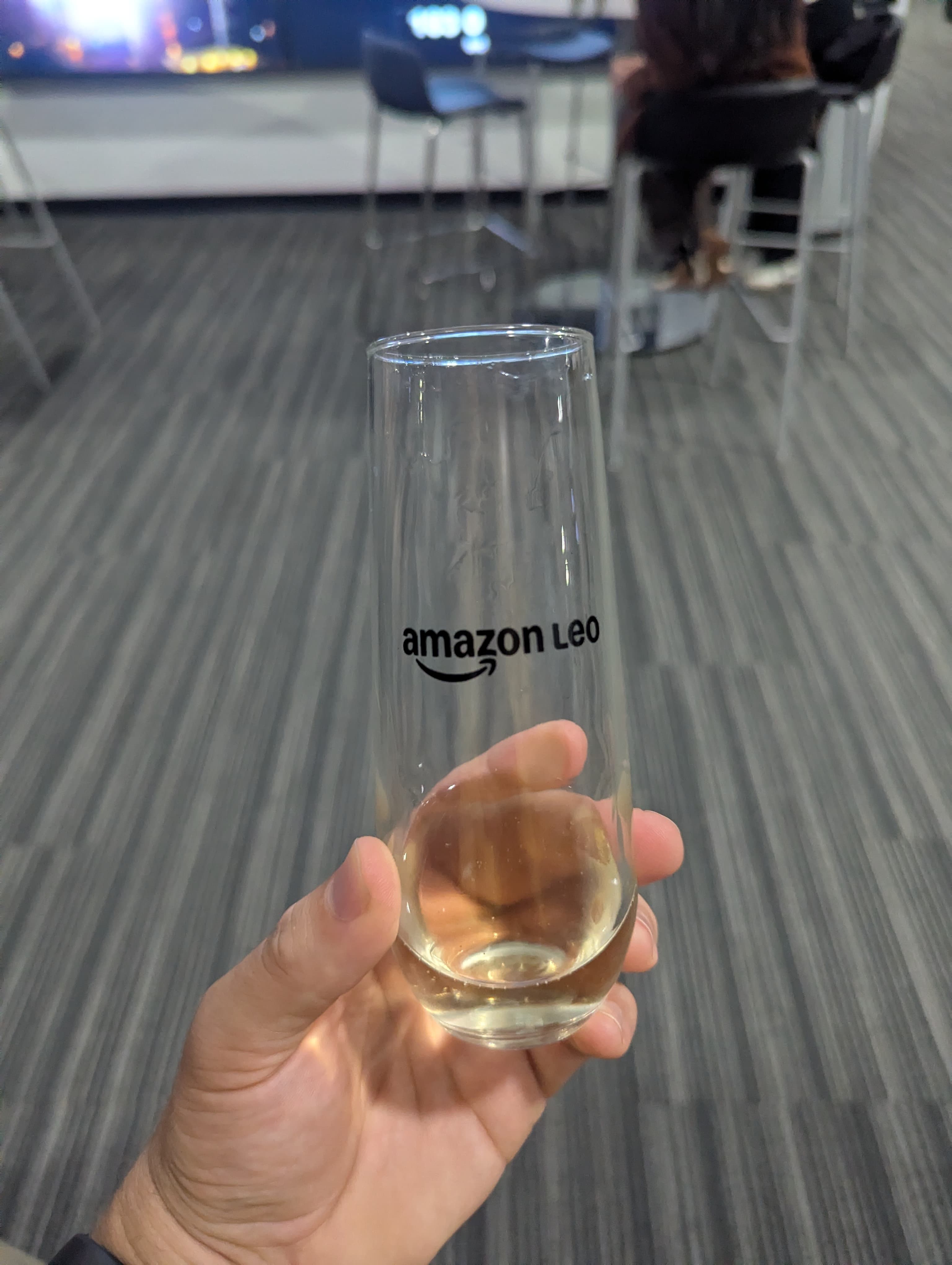
After telemetry confirmed nominal orbital insertion and spacecraft separation, ULA flight executives shared concluding remarks congratulating our Amazon engineering groups and celebrating Leo's final operational integration with the Atlas V chassis. We raised commemorative branded champagne flutes for a toast to an untroubled flight profile.
Closing the Atlas Chapter
KA-01 represented our initial orbital deployment milestone, where I monitored real-time avionics evaluations during flight director status polls. LA-08 brought down the curtain on our contracted Atlas V vehicle series. Supporting both alpha and omega departures across the identical rocket platform felt like completing a full professional circle.
Your daily engineering perspective changes permanently when you watch physical hardware you checked and validated tear through the atmosphere on a column of flame. Spending forty hours a week examining terminal output logs and database queries can occasionally feel detached from physical consequences, but standing on a facility rooftop at midnight watching satellites achieve orbital trajectory transforms how you view every line of validation code.
I am deeply grateful for the peer recognition and for the dedicated engineers on my team who made this journey possible.